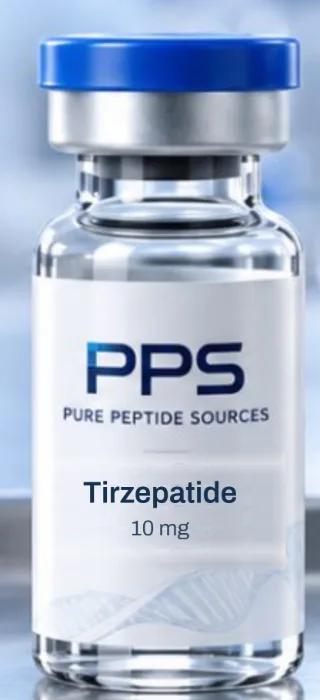
Tirzepatide
10 mg
Dual GIP and GLP-1 receptor agonist, 10 mg per vial.
- CAS
- 2023788-19-2
- Storage
- Refrigerated
Comparison
The current frontier of incretin research: a dual agonist against a triple agonist. The added receptor is glucagon, and it changes what the compound is studied for rather than simply how much it does.
Tirzepatide is the established dual-agonist comparator with the larger body of published work behind it. Retatrutide is where the glucagon arm enters, which is a genuinely different mechanism rather than more of the same: appetite and glucose signalling are joined by energy expenditure. Because it is not approved anywhere, research supply is the only route to it, which is why demand is concentrated there right now.
| Property | Tirzepatide | Retatrutide |
|---|---|---|
| Receptor targets | GIP and GLP-1 | GIP, GLP-1 and glucagon |
| Class | Dual agonist | Triple agonist |
| Added pathway | None beyond the two incretins | Glucagon receptor, recruiting energy expenditure |
| Molar mass | 4813.45 g/mol | 4731.35 g/mol |
| Regulatory status | Approved in major markets | Not approved in any market |
| Availability | Widely available | Research supply only |
| Price | $85.00 · 10 mg | $89.00 · 10 mg |
10 mg
Dual GIP and GLP-1 receptor agonist, 10 mg per vial.
10 mg
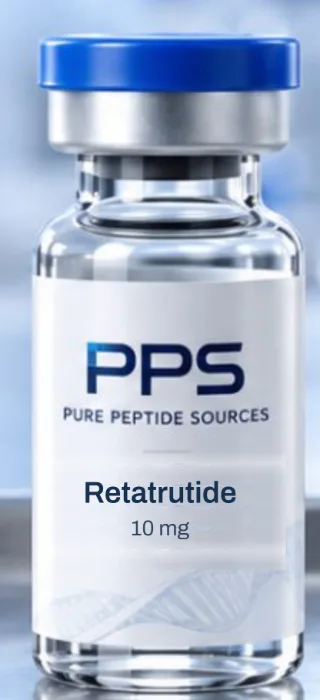
Triple GIP, GLP-1 and glucagon receptor agonist, 10 mg per vial.
Glucagon receptor activity recruits energy expenditure, a mechanism the two incretin receptors do not cover. That is what separates a triple agonist from a dual agonist rather than any difference in incretin potency.
No. It is not approved in any market, and approval is not expected before 2027 at the earliest. Research supply is therefore the only route to the compound.
It is the newest molecule in the class, it adds a mechanism the others do not have, and it is unavailable through any approved channel. Those three together concentrate research demand on it.
All products listed are sold strictly for in-vitro laboratory research and analytical use. They are not drugs, foods, cosmetics or medical devices, and are not intended to diagnose, treat, cure or prevent any disease.
PPS assistant
Catalogue, handling, shipping and payment
Research use only. No dosing or medical advice. A person: Info@purepeptidesources.com