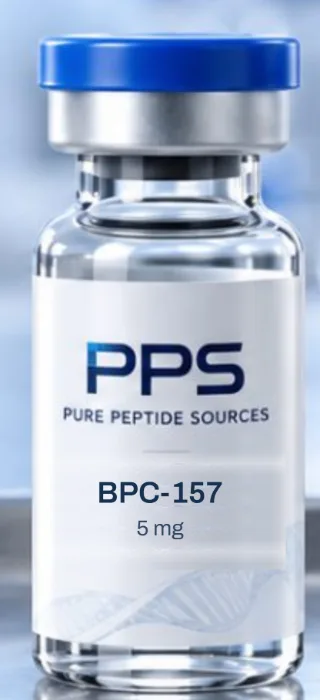
BPC-157
5 mg
Pentadecapeptide derived from gastric protective protein, 5 mg per vial.
- CAS
- 137525-51-0
- Sequence
- GEPPPGKPADDAGLV
- Storage
- Refrigerated
Comparison
The two most-studied compounds in tissue repair research, frequently named together and frequently assumed to do the same thing. They do not: they come from different source proteins and act through different mechanisms, which is exactly why they are so often studied side by side.
They are complementary rather than interchangeable. BPC-157 is the reference compound where the research question involves gut mucosa or localised connective tissue. TB-500 is the one where cell migration and remodelling are the endpoints. A protocol comparing the two, or the pre-combined blend, is the usual design when the question is whether the mechanisms are additive.
| Property | BPC-157 | TB-500 |
|---|---|---|
| Origin | A 15-amino-acid sequence from human gastric protective protein | The active fragment of thymosin beta-4, a widely expressed actin-binding protein |
| Size | Pentadecapeptide, 1419.5 g/mol | Peptide fragment, 4963.4 g/mol |
| Primary mechanism studied | Angiogenic signalling and growth factor receptor expression | Actin sequestration and cell migration |
| Research emphasis | Gut mucosa and connective tissue models | Cell motility and tissue remodelling models |
| Distribution in study | Studied both systemically and locally | Studied predominantly systemically |
| Stability in solution | Comparatively stable; an arginate salt form extends this further | Standard peptide handling; refrigerate once reconstituted |
| Price | $49.00 · 5 mg | $49.00 · 5 mg |
5 mg
Pentadecapeptide derived from gastric protective protein, 5 mg per vial.
5 mg
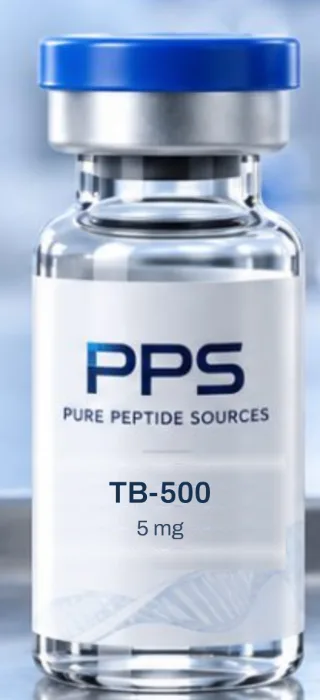
Synthetic active fragment of thymosin beta-4, 5 mg per vial.
No. BPC-157 is a 15-amino-acid sequence derived from a gastric protective protein. TB-500 is a fragment of thymosin beta-4, an actin-binding protein. They differ in origin, in size, and in the mechanisms they are studied for.
Yes, and a pre-combined blend is stocked for exactly that reason. Both reconstitute in bacteriostatic water and remain in solution together, which is what makes the combined-versus-individual comparison practical to run.
BPC-157 has the larger published literature, particularly in gastrointestinal and tendon models. TB-500 and full-length thymosin beta-4 are better represented in cardiac and corneal work.
All products listed are sold strictly for in-vitro laboratory research and analytical use. They are not drugs, foods, cosmetics or medical devices, and are not intended to diagnose, treat, cure or prevent any disease.
PPS assistant
Catalogue, handling, shipping and payment
Research use only. No dosing or medical advice. A person: Info@purepeptidesources.com